Payday allowed
Borrowing in California: What State Law Allows
California allows small payday loans but caps their size and fee, and it limits rates on most installment loans under $10,000. Here is what each kind of lender may charge, and what happens if you fall behind.
By Lendmira Editorial Team Updated 7 min read
- Payday loan limit
- $300 check
- Payday fee cap
- 15% of the check
- Cap, $2,500–$9,999 loans
- 36% + fed funds rate
- Time limit to sue on debt
- 4 years
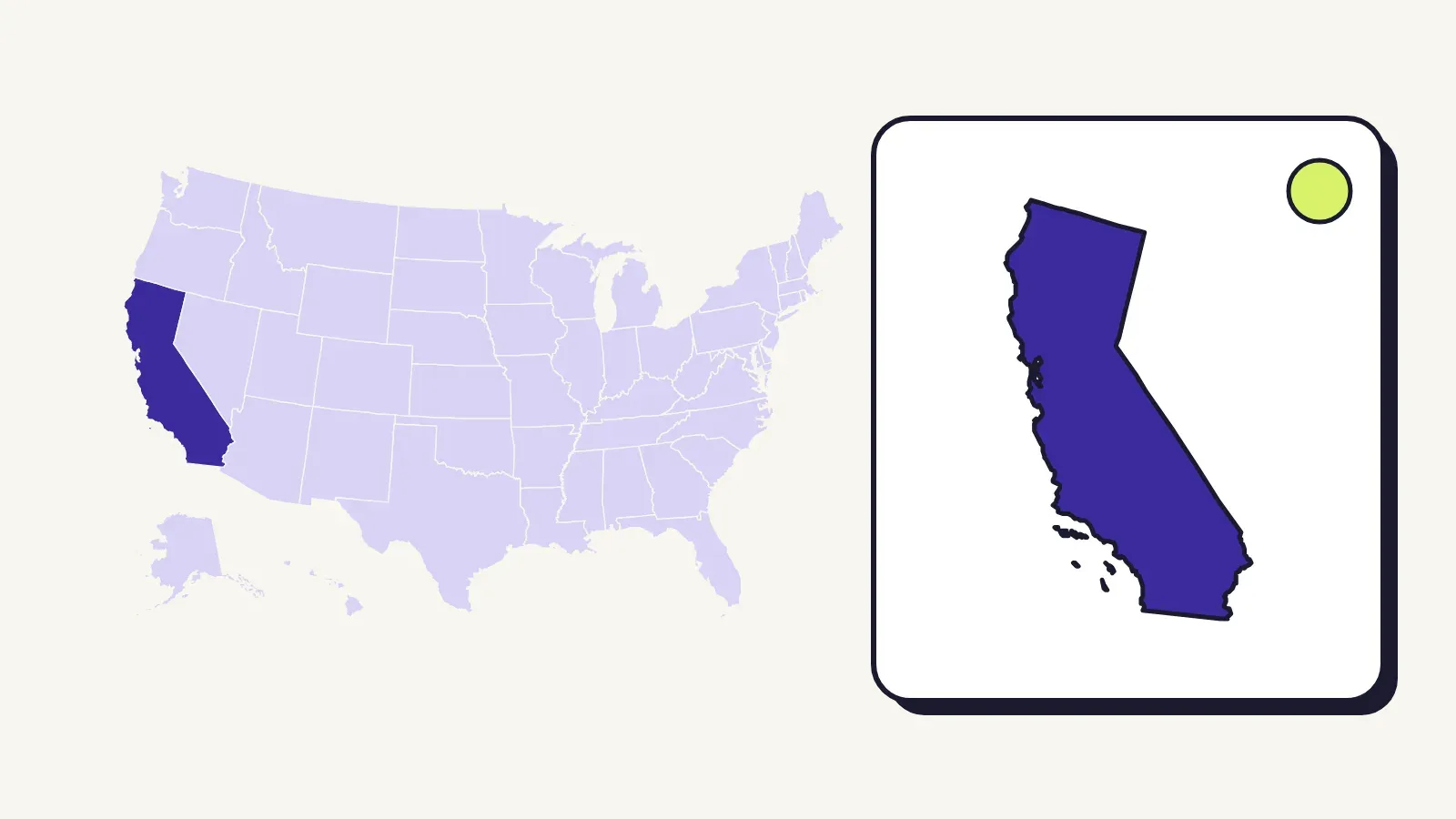
The short version
California payday loans are limited to a $300 check, with a fee of up to 15% ($45), for up to 31 days. On a 14-day loan that is about 460% APR. Licensed lenders can charge no more than 36% plus the federal funds rate on loans of $2,500 to under $10,000, and less on smaller loans. Creditors have four years to sue, and garnishment is capped at 20% of disposable pay.
California lending rules at a glance
Payday loans: a $300 check and a 15% fee
California calls payday loans deferred deposit transactions. Lenders need a license from the Department of Financial Protection and Innovation (DFPI) under the California Deferred Deposit Transaction Law. You write a personal check of up to $300, and the lender holds it for up to 31 days.
| Check you write | $300 |
|---|---|
| Maximum fee (15%) | $45 |
| Cash you receive | $255 |
| APR if due in 14 days | About 460% |
| APR if due in 31 days | About 208% |
- One at a time. A lender can't make you a new payday loan while an earlier one with it is still in effect.
- No rollovers. A lender can't reuse your check for a new loan or let you pay one payday loan with another.
- Free payment plans. A lender may give you an extension or payment plan but can't charge extra for it.
- Bounced check fee of no more than $15, and no added late fee.
Compare the APR on any offer with the APR calculator, and look at payday loan alternatives before you write the check.
Installment loan rates by loan size
Most consumer installment lenders that aren't banks are licensed under the California Financing Law. Its rate caps depend on how much you borrow.
| Loan amount | Maximum rate |
|---|---|
| Under $2,500 | 2.5% a month on the first $225, stepping down to 1% a month above $1,650 |
| $2,500 to under $10,000 | 36% simple interest a year plus the federal funds rate |
| $10,000 or more | No rate cap in these sections |
Under $2,500, the monthly caps apply to slices of the balance: 2.5% on the first $225, 2% from $225 to $900, 1.5% from $900 to $1,650, and 1% above that. As yearly rates, that's 30%, 24%, 18% and 12%, so the blended rate falls as the loan grows.
On loans of $2,500 to under $10,000, the lender must also report your payments to at least one nationwide credit bureau and offer a free credit education program before you get the money. On-time payments can help your file; see how credit reports work. To compare offers, start with our guide to personal loans.
Car title loans are legal, under the same caps
Car title loans are legal in California, but there is no separate law that sets higher prices for them. A lender making a consumer loan secured by your car under the California Financing Law faces the same caps as any other loan of that size. That rules out the triple-digit title loans sold in some states for loans under $10,000, but title loans of $2,500 or more can still cost 36% plus the federal funds rate, which is above 36%, and loans of $10,000 or more have no rate cap at all.
Four years to sue on most debts
A creditor generally has four years to sue on a written contract and four years on a book account, so credit card debt gets four years either way. After that, a collector can still ask you to pay but can't win in court if you raise the time limit. Read how statutes of limitations work before you pay on an old debt.
Garnishment: 20% at most
California limits an earnings withholding order to the lesser of 20% of your weekly disposable earnings or 40% of the amount by which they exceed 48 times the state minimum hourly wage. If the local minimum wage where you work is higher, the local rate is used. That's tighter than the federal 25% limit, and low earners may owe nothing at all.
State law also has its own debt collection rules that apply alongside federal ones. See debt collectors and your rights.
Checking a lender and filing a complaint
- Search the license on the DFPI website or NMLS Consumer Access before you apply.
- Get the costs in writing: the APR, every fee in dollars and the total of payments.
- Complain to the DFPI if a lender overcharges, rolls over a payday loan or misleads you. You can also file with the CFPB.
Common questions
Are payday loans legal in California?
Yes, from DFPI-licensed lenders. The check can be up to $300, the fee up to 15% of the check, and the term up to 31 days, with no rollovers.
What is the maximum interest rate on a personal loan in California?
For licensed lenders, 36% a year plus the federal funds rate on loans of $2,500 to under $10,000, with lower tiered caps on smaller loans. Loans of $10,000 or more aren't covered by these caps.
Are title loans legal in California?
Yes. A licensed lender can take your car as security, but it must stay within the California Financing Law caps for loans under $10,000, which is 36% plus the federal funds rate from $2,500. Loans of $10,000 or more have no cap.
How long can a creditor sue me for credit card debt in California?
Four years. California applies a four-year limit to both written contracts and book accounts.
Sources
- California DFPI — Payday lenders (Deferred Deposit Transaction Law)
- California Financial Code § 23036 — Deferred deposit fees and limits
- California Financial Code § 23037 — Prohibited acts, including rollovers
- California Financial Code § 22303 — Rates on loans under $2,500
- California Financial Code § 22304.5 — Rate cap on loans of $2,500 to under $10,000
- California Code of Civil Procedure § 337 — Four-year limit
- California Code of Civil Procedure § 706.050 — Earnings withholding limits
Facts on this page were checked against these sources on October 13, 2026. The cap on $2,500 to $9,999 loans moves with the federal funds rate in effect the month before the loan is made.
Keep reading
-
Loan type
Payday loan alternatives
Credit union PALs up to $2,000 at 28% APR or less, paycheck advances, payment plans and local help.
-
Debt help
Debt collectors and your rights
Validation notices, the 30-day dispute window, the 7-calls-in-7-days rule and how to complain.
-
State law
Nevada
No rate cap; payday loans limited to 25% of monthly income and 35 days; title loans up to car value.