Payday allowed
Borrowing in Nevada: What State Law Allows
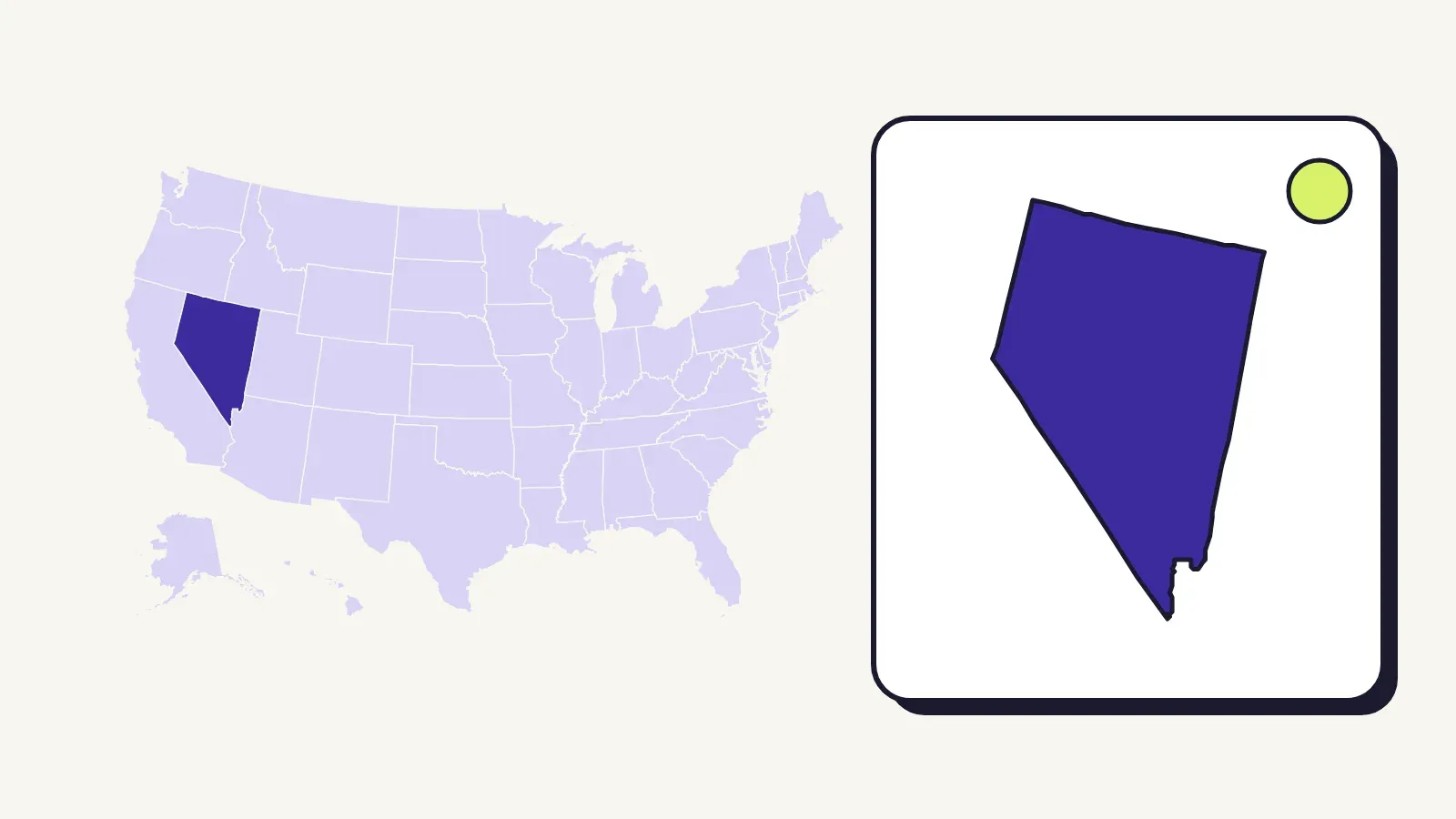
Nevada has no interest cap on payday, title or other high-interest loans. What it does limit is how much you can borrow, for how long, and what a lender must do if you can't pay.
By Lendmira Editorial Team Updated 7 min read
- Payday loans
- Allowed, no rate cap
- Payday loan size limit
- 25% of monthly gross pay
- Title loan limit
- Car's fair market value
- Garnishment, lower pay
- Up to 18% of disposable
The short version
Nevada allows deferred deposit (payday), high-interest and title loans without a cap on the interest rate. A payday loan can't exceed 25% of your expected gross monthly income or run more than 35 days, and a title loan can't exceed the car's fair market value. Every loan goes into a statewide database, and lenders must offer a repayment plan after a default. Creditors have six years to sue on a written contract, and garnishment is limited to 18% of disposable pay for lower earners.
Nevada lending rules at a glance
Three kinds of high-cost loans
Chapter 604A of the Nevada Revised Statutes covers three products. Each limits size, length and rollovers rather than price, so the APR on your agreement is what tells you the cost.
| Loan type | Size limit | Term |
|---|---|---|
| Deferred deposit (payday) | All your payday loans combined: 25% of expected gross monthly income | Up to 35 days; no extending or refinancing past 90 days from the start |
| High-interest loan (APR over 40%) | Lender must find you can repay | Up to 35 days, or 90 days if paid in equal installments; no extension past 90 days |
| Title loan | Up to the car's fair market value | Up to 30 days plus up to six 30-day extensions, or up to 210 days if paid in installments |
For all three, the lender must decide that you have a reasonable ability to repay before making the loan. On a title loan it can count only the income of a legal owner of the vehicle or a co-signing customer. Title loan extensions can't add new fees, raise the APR or roll unpaid interest into the principal.
The statewide database
Since February 1, 2022, licensees must record every loan in a statewide database at the time of the transaction. It shows lenders whether you already have a loan with another licensee, had one in the past 30 days, or had three or more in the past six months. The records are confidential.
The Financial Institutions Division's 2024 report shows the scale: 549,182 loans registered that year, including 377,700 high-interest loans, 134,243 deferred deposit loans and 37,239 title loans.
If you can't repay on time
Nevada requires lenders to offer a way out before piling on costs. After a default on a deferred deposit (payday) loan:
- The lender must send you a written repayment plan offer, generally within 15 days, and keep it open for at least 30 days.
- The plan must give you at least 90 days to pay, unless you agree to less, and the first payment can't exceed 20% of what you owe.
- On a payday loan, interest after the due date is capped at the prime rate plus 10%, for no more than 90 days.
- Returned-payment fees are capped at $25, and no more than two for insufficient funds.
- You can cancel a new payday loan by the close of business on the next business day.
Before you take a high-interest loan, compare it with payday loan alternatives and check what a missed payment would do in our guide to missing a loan payment.
Time limits on lawsuits
Nevada gives creditors six years to sue on a contract founded on a written instrument and four years on one that isn't (NRS 11.190). Card debt may fall under the four-year rule when there's no signed agreement, but a creditor relying on signed paperwork may argue for six. The clock runs from the last payment or last charge.
Nevada adds a protection many states lack: a payment made after the period has expired does not revive the debt. Read how old-debt time limits work before you respond to a collector.
Garnishment and bank account protection
After a judgment, the limit depends on your gross weekly pay when the writ was issued. If it was $770 or less, a creditor can take up to 18% of disposable earnings; if more, up to 25%. In both cases, it can't take more than the amount above 50 times the federal minimum wage per week.
Bank accounts get automatic protection too: $2,000 if an exempt electronic deposit, such as Social Security, arrived in the previous 45 days, or $400 otherwise. Your rights with collectors are in debt collectors and your rights.
Checking a lender and making a complaint
- Look up the license on the Nevada Financial Institutions Division's licensee search.
- Ask for the APR and the total of payments in writing, and confirm the loan fits the size limit for your income.
- File a complaint with the Financial Institutions Division if a lender skips the repayment-plan offer, lends more than the law allows or misleads you.
Common questions
Are payday loans legal in Nevada?
Yes. There's no interest cap, but a loan can't exceed 25% of your expected gross monthly income or run more than 35 days, and it can't be extended past 90 days from the start.
How do title loans work in Nevada?
You can borrow up to the car's fair market value for 30 days, with up to six 30-day extensions that can't add fees, or repay in installments over up to 210 days.
What is the statute of limitations on debt in Nevada?
Six years for written contracts and four for contracts not in writing. A payment made after the period runs out doesn't restart it.
How much of my wages can be garnished in Nevada?
Up to 18% of disposable earnings if your gross weekly pay is $770 or less, or 25% if it's more, and never more than the amount above 50 times the federal minimum wage.
Sources
- Nevada Financial Institutions Division
- Nevada FID — Lending database annual report 2024
- NRS Chapter 604A — Deferred deposit, high-interest and title loans
- NRS 604A.5074 — Title loan term and extensions (Justia)
- NRS Chapter 11 — Statutes of limitations
- NRS Chapter 31 — Garnishment limits
Facts on this page were checked against these sources on October 13, 2026. Loan counts come from the Division's database report for January through December 2024.
Keep reading
-

Loan type
Payday loan alternatives
Credit union PALs up to $2,000 at 28% APR or less, paycheck advances, payment plans and local help.
-

Debt help
Old debt and time limits
Most states give collectors 3–6 years to sue. What can restart the clock, and why it's not the 7-year credit rule.
-
State law
Arizona
Payday loans illegal since 2010; title loans up to 17% a month; 10% cap on wage garnishment.