Payday allowed
Borrowing in Mississippi: What State Law Allows
Mississippi licenses three kinds of high-cost small loans, each with its own fee limits. The limits cap the price per month, not the APR, so it pays to do the math before you sign.
By Lendmira Editorial Team Updated 7 min read
- Payday loans
- Allowed, up to $500 check
- Title pledge fee cap
- 25% of principal a month
- Time limit to sue on debt
- 3 years
- Wages after garnishment
- Exempt for first 30 days
The short version
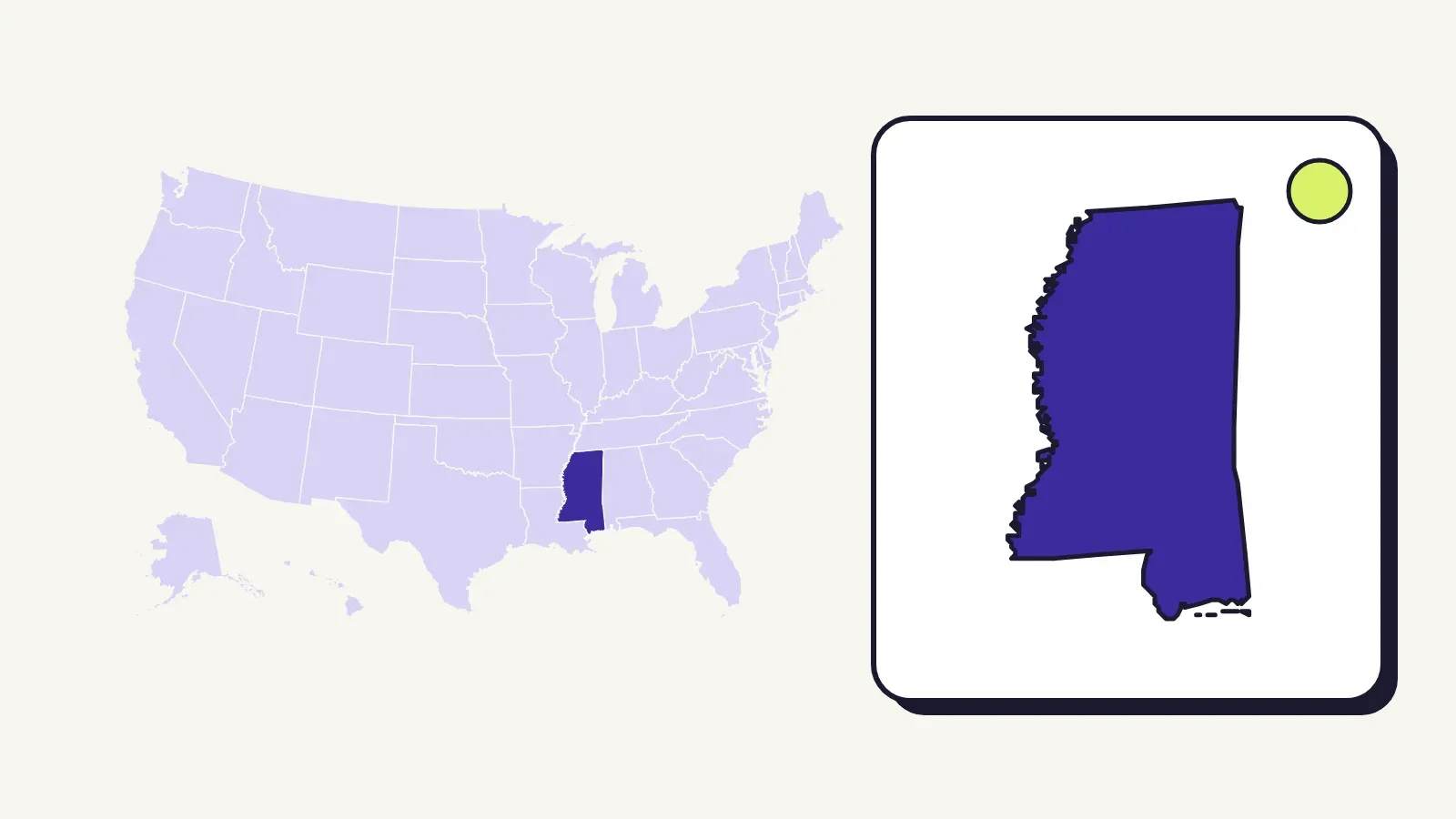
Mississippi allows payday loans with a check of up to $500, including a fee of up to $21.95 per $100 advanced. Title pledge lenders may charge 25% of the principal per month on loans of up to $2,500, and Credit Availability Act lenders make installment loans of up to $3,320. Creditors generally have just three years to sue, and wages are exempt for the first 30 days after a garnishment is served.
Mississippi lending rules at a glance
Payday loans under the Check Cashers Act
Mississippi calls payday loans delayed deposit transactions. You write a check, the lender advances cash, and it holds the check until the agreed date. The face of the check, fee included, can't exceed $500, and the total of all payday checks held for you at one time can't exceed $500 either.
| Check amount | Maximum fee | Term |
|---|---|---|
| Up to $250 | $20 per $100 advanced | Up to 30 days |
| $250.01 to $500 | $21.95 per $100 advanced | 28 to 30 days |
On the largest loan, you get $410 in cash and owe $500, a $90 fee. Over 30 days, that's an APR of about 267%. Lenders cannot renew or roll over a loan, cannot pay one off with a new one, and cannot charge late fees. The Department of Banking and Consumer Finance says one returned-check fee of up to $30 is allowed only if your agreement discloses it. You can ask for a payment plan, but the lender doesn't have to agree.
Title pledge loans
The Title Pledge Act lets a licensed lender hold your car title for a 30-day loan of up to $2,500 per title, at a charge of up to 25% of the principal per month, which is about 300% a year. You can extend in 30-day periods, but from the first extension you must pay down at least 10% of the original principal each time.
- You have 30 days after the due date to redeem the title by paying what you owe, with no extra charge.
- After that, the lender can repossess the car without going to court, as long as it doesn't breach the peace.
- You get three business days after repossession to pay and get the car back.
- If the lender sells the car, it must return 85% of any money left over after the debt, charges, repossession costs and a $100 sales fee.
Installment loans with a monthly fee
Credit Availability Act lenders make installment loans with a maximum outstanding balance of $3,320 as of July 1, 2026 (up from $3,250). Loans of $500 or less run four to six months; larger loans run six to twelve months.
Monthly handling fee
Up to $25 per $100 borrowed per month, according to the Department's consumer pamphlet.
Origination fee
1% of the amount disbursed or $5, whichever is greater.
Cancel window
One business day. Early payoff can lower the total fees.
Late fee
Up to 10% of the past-due amount, only after 10 business days and only if the contract says so.
Traditional small loan companies are licensed separately and can lend up to $5,330 from July 1, 2026. Before you take any of these, compare them with payday loan alternatives such as a credit union loan, and run the numbers in the loan payment calculator.
Three years to sue, and a 30-day pause on garnishment
Mississippi has one of the shortest collection windows in the country. Most actions, including suits on contracts and on open accounts such as credit cards, must be filed within three years (Miss. Code 15-1-49 and 15-1-29). See how statutes of limitations work before you pay on an old debt, because some actions can affect the clock.
If a creditor wins a judgment and garnishes your wages, your pay is exempt for the first 30 days after the writ is served. After that, the creditor can take the lesser of 25% of your weekly disposable earnings or the amount above 30 times the federal minimum wage. Support orders and taxes follow different rules.
Proposals that didn't pass, and where to complain
A 2024 bill (House Bill 865) would have capped payday, title pledge and pawn charges at 25% APR. It died in committee, so the limits above still apply.
- Check the license with the Department of Banking and Consumer Finance. Payday, title pledge, credit availability and small loan lenders each need their own license.
- Get the APR and dollar cost in writing. Payday agreements must show the fee in dollars and as an APR.
- Complain to the Department at 1-800-844-2499 or the Attorney General's Consumer Protection Division at 1-800-281-4418. Your federal rights with collectors are in debt collectors and your rights.
Common questions
Are payday loans legal in Mississippi?
Yes. A licensed check casher can hold a check of up to $500, including a fee of $20 to $21.95 per $100 advanced, for up to 30 days. Rollovers are not allowed.
How much can a title loan cost in Mississippi?
Up to 25% of the principal per month, on loans of up to $2,500. Each extension requires paying down 10% of the original principal.
What is the statute of limitations on debt in Mississippi?
Generally three years, for written contracts and for open accounts like credit cards.
Can my wages be garnished in Mississippi?
Yes, after a judgment, but wages are exempt for the first 30 days after the writ is served. After that, up to 25% of disposable earnings can be taken.
Sources
- Mississippi Department of Banking and Consumer Finance — Consumer finance licensing
- DBCF — Check cashers consumer education pamphlet
- DBCF — Clarification on House Bill 547 (September 2026)
- DBCF — Credit Availability Act consumer pamphlet
- DBCF — Credit availability maximum balance memo (July 2026)
- Miss. Code 75-67-519 — Delayed deposit limits (Justia)
- Miss. Code 75-67-413 — Title pledge charges (Justia)
- Miss. Code 85-3-4 — Wage exemption (Justia)
Facts on this page were checked against these sources on October 13, 2026. The Department adjusts the maximum credit availability and small loan amounts each July.
Keep reading
-
Loan type
Payday loan alternatives
Credit union PALs up to $2,000 at 28% APR or less, paycheck advances, payment plans and local help.
-

Debt help
Old debt and time limits
Most states give collectors 3–6 years to sue. What can restart the clock, and why it's not the 7-year credit rule.
-
State law
Alabama
Payday loans up to $500 at $17.50 per $100; title pawns up to 25% a month; 25% garnishment cap.