Payday allowed
Borrowing in Minnesota: What State Law Allows
Since 2024, Minnesota counts every fee in a small loan's APR and caps it at 50%. Storefront payday lenders have left. Here is what the rules mean when you need cash fast or fall behind.
By Lendmira Editorial Team Updated 7 min read
- Small-loan APR cap
- 50%, all fees included
- Ability-to-repay check
- Required above 36% APR
- Time limit to sue on debt
- 6 years
- Wage garnishment
- 10%–25%, by income
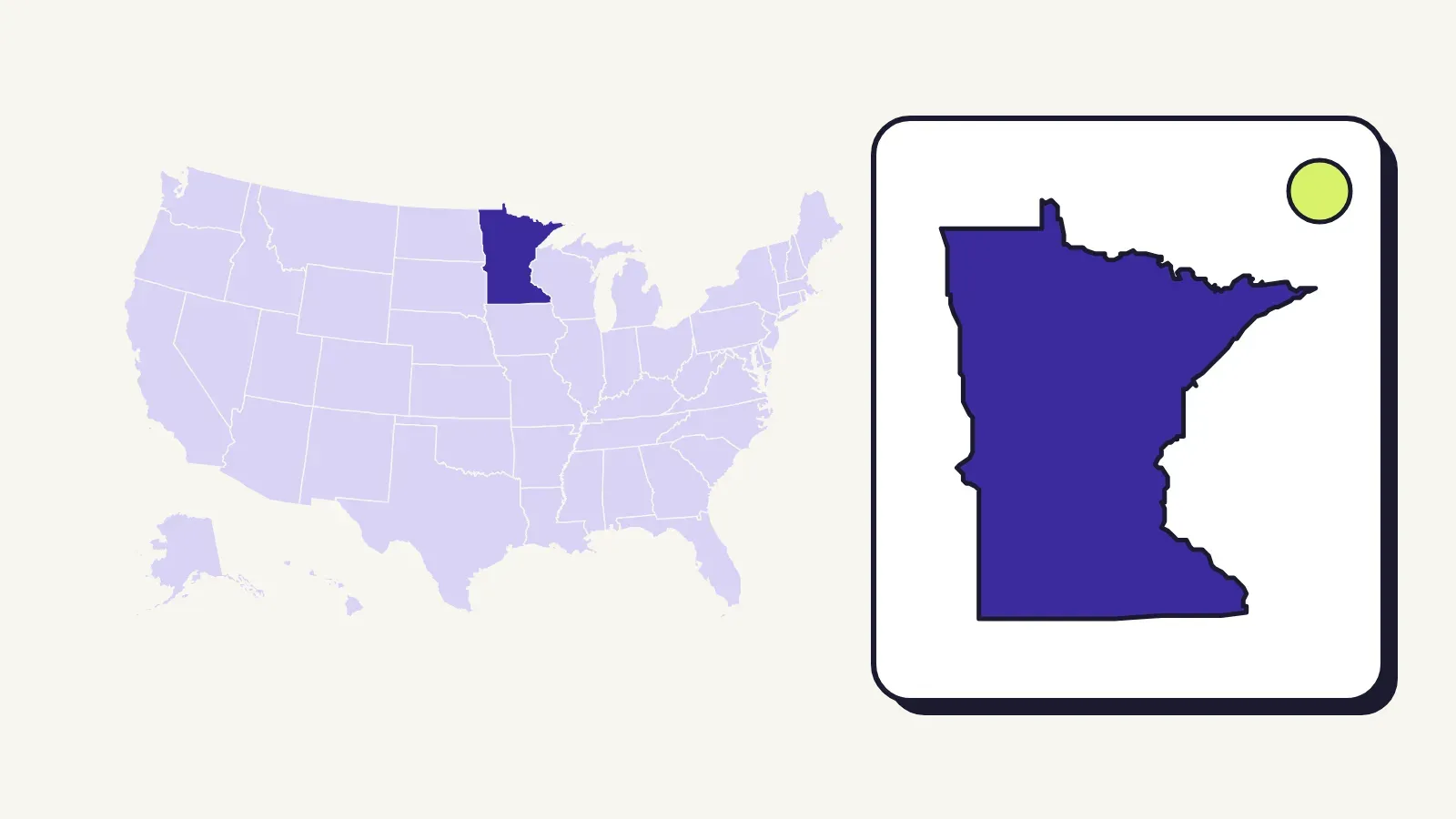
The short version
Minnesota caps short-term and small loans at an all-in APR of 50%, and any loan priced above 36% requires the lender to verify that you can afford it. The rules took effect January 1, 2024, and storefront payday lenders stopped operating rather than comply. Lenders must be licensed by the Department of Commerce. Creditors have six years to sue on consumer debt, and garnishment is limited to 10%–25% of disposable pay depending on income.
Minnesota lending rules at a glance
The 50% ceiling and what it covers
Minnesota rewrote its small-loan rules in 2023. Starting January 1, 2024, the annual percentage rate on these loans must include all interest, finance charges and fees, so a lender can't keep the stated rate low and make its money on add-ons. Two kinds of loans fall under the cap:
Consumer small loan
Unsecured, repaid in one payment, $350 or less, for no more than 30 days. You can have only one outstanding at a time. All-in APR up to 50%.
Consumer short-term loan
$1,300 or less, with a payment of more than 25% of the principal due within 60 days. All-in APR up to 50%.
A lender that charges more than 36% must first document your net income, major obligations and basic living expenses and conclude that you can repay on time and still cover your bills for 30 days after the loan is paid off. Each new advance on a line of credit counts as a new loan and needs a new check.
What happened to payday lenders
The old model, a $15 fee per $100 for two weeks, doesn't fit under a 50% cap. According to a January 2026 report from the Center for Responsible Lending, storefront payday lenders stopped operating in Minnesota rather than comply, while some online lenders continue to target Minnesotans illegally.
A 2026 law closes one route those lenders used. A business that arranges a short-term loan for someone else now needs its own Commerce license, and the 2023 law already treats a company as the lender if it holds the main economic stake in the loan, even if a partner's name is on the contract.
Title loans and larger installment loans
Small title-secured loans are possible in Minnesota, but tightly limited. A non-bank lender that takes a car title as collateral for a loan of $1,000 or less must be licensed by Commerce as a regulated lender or an industrial loan and thrift company, and its total charges can't exceed what a pawnshop may charge: 3% of the amount advanced per month plus limited fees. If you miss payments, you can still lose the car.
For bigger loans from licensed lenders, Minnesota sets a ceiling of the greater of 21.75% APR or a blended rate of 33% on the first $1,425 of the balance and 19% on the rest. The dollar tier is indexed to inflation. Banks chartered elsewhere may follow their home state's rules, so compare the APR on every personal loan offer.
Six years to sue, and payments don't restart the clock
A creditor has six years to sue on a contract (Minn. Stat. 541.05), and a separate law sets the same six years for consumer debt. That consumer-debt law adds an unusual protection: once the period has run, a payment, a bankruptcy discharge or an oral or written acknowledgment of the debt does not revive it. In many states, a small payment can restart the clock. Read how statutes of limitations work before you respond to an old collection letter.
How much of your pay can be garnished
Minnesota protects more of your paycheck than federal law. After a judgment, the share of disposable earnings a creditor can take on ordinary debt depends on your income, and a base amount tied to the minimum wage is protected first.
- 10% of disposable earnings at the lower end of the income tiers.
- 15% in the middle tier.
- 25% only for higher earners.
- Only earnings above 40 times the hourly minimum wage (state or federal, whichever is higher) per week can be reached.
Child support follows separate, higher limits. Debt collectors working in Minnesota must also give you a written list of Minnesota nonprofit credit counseling organizations.
Checking a lender and filing a complaint
- Look up the license on the Minnesota Department of Commerce website or NMLS Consumer Access.
- Ask for the all-in APR and the total dollar cost. If a small loan is above 50%, or above 36% without any questions about your income and expenses, something is wrong.
- Complain to Commerce at 651-539-1600 or online, and to the CFPB if the lender is out of state.
- Know your collection rights: debt collectors and your rights.
Common questions
Are payday loans legal in Minnesota?
Small short-term loans are legal from licensed lenders, but the all-in APR is capped at 50%, and loans above 36% require an ability-to-repay check. Storefront payday lenders stopped operating after the cap took effect in 2024.
What is the maximum interest rate on a payday loan in Minnesota?
An all-in APR of 50% for consumer small loans (up to $350) and consumer short-term loans (up to $1,300), counting every fee.
How long can a debt collector sue me in Minnesota?
Six years for consumer debt. After that, a payment or acknowledgment does not restart the clock under Minnesota law.
How much can be garnished from my wages in Minnesota?
Between 10% and 25% of disposable earnings depending on your income, and only on earnings above 40 times the hourly minimum wage per week. Child support has higher limits.
Sources
- Minnesota Department of Commerce — Payday loans
- Minnesota Department of Commerce — Auto title loans
- Minn. Stat. 47.60 — Consumer small loans
- Minn. Stat. 47.601 — Consumer short-term loans
- Minn. Stat. 47.603 — Ability to repay
- Minn. Stat. 47.602 — Motor vehicle title loans
- Minn. Stat. 541.053 — Consumer debt time limit
- Minn. Stat. 571.922 — Garnishment limits
- Center for Responsible Lending — Minnesota rate cap report (January 2026)
Facts on this page were checked against these sources on October 13, 2026. The licensing requirement for loan arrangers comes from 2026 Minnesota Session Laws, chapter 124.
Keep reading
-
Loan type
Payday loan alternatives
Credit union PALs up to $2,000 at 28% APR or less, paycheck advances, payment plans and local help.
-
Debt help
Old debt and time limits
Most states give collectors 3–6 years to sue. What can restart the clock, and why it's not the 7-year credit rule.
-
State law
Wisconsin
Payday loans up to $1,500 with no rate cap before maturity; title loans up to 50% of car value.