Payday allowed
Borrowing in Kansas: What State Law Allows
Kansas allows payday loans with a flat fee cap and a once-a-year repayment plan at no extra cost. Installment loans face a 36% ceiling. Here are the numbers, and what happens if a debt goes unpaid.
By Lendmira Editorial Team Updated 6 min read
- Payday loans
- Allowed, up to $500
- Payday fee cap
- 15% of the advance
- Installment loan cap
- 36% a year (closed-end)
- Time to sue (written)
- 5 years
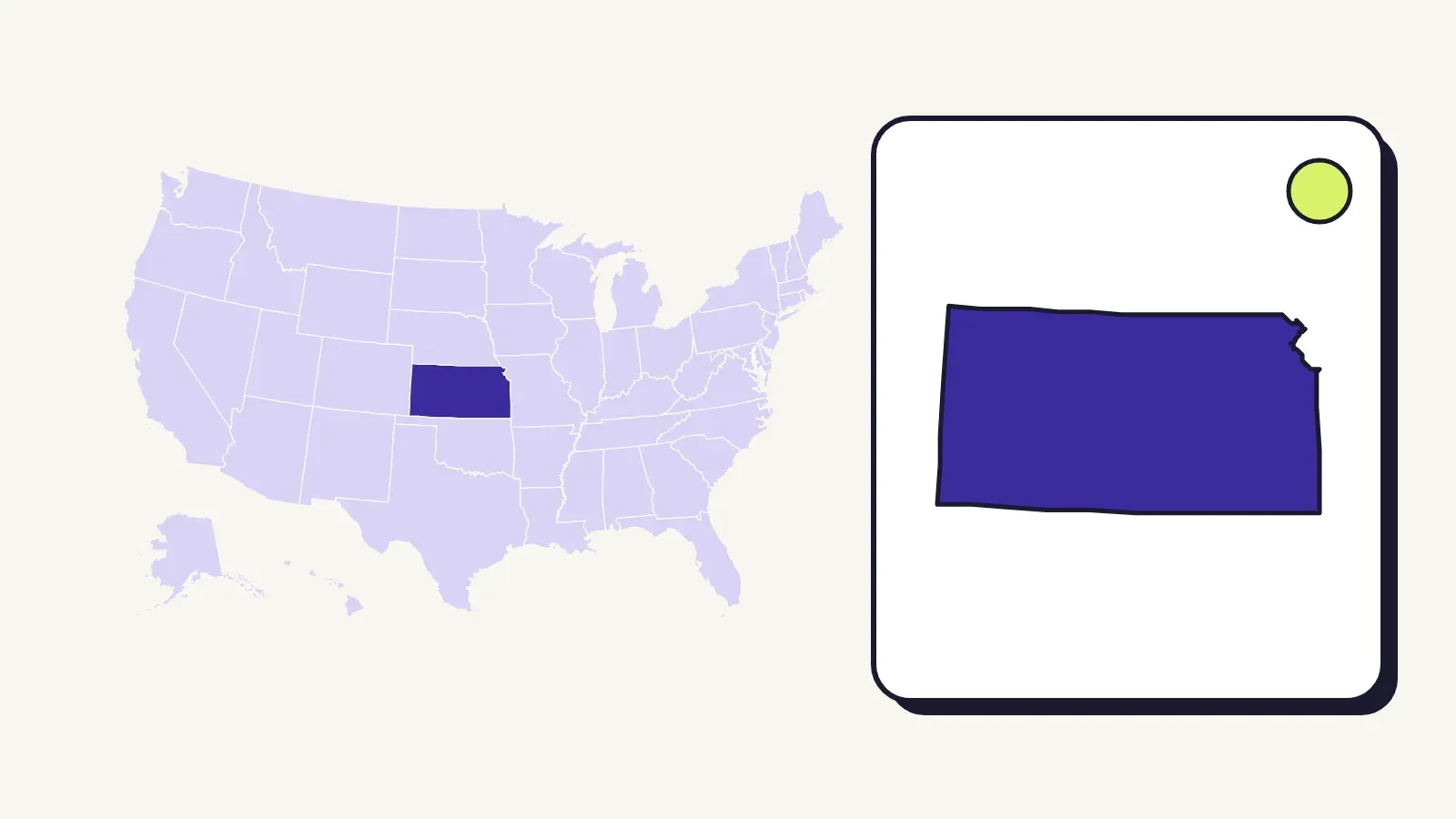
The short version
Kansas lets licensed lenders make payday loans of up to $500 for 7 to 30 days, with a fee of no more than 15% of the amount advanced. You can have only two loans with the same lender at once and three in 30 days, and once a year you can switch to an extended payment plan with no added fees. Other closed-end consumer loans are capped at 36% a year. A creditor has five years to sue on a written contract and three on an unwritten one.
Kansas lending rules at a glance
The payday loan rules in K.S.A. 16a-2-404
Payday loans in Kansas are made by lenders licensed through the Office of the State Bank Commissioner (OSBC) under the Uniform Consumer Credit Code. The statute sets the limits:
Amount
No more than $500 per loan.
Fee
No more than 15% of the cash advance, plus one returned-check charge if your check bounces.
Term
At least 7 days and no more than 30 days.
How many
Two loans outstanding with the same lender at a time, and three in any 30 days.
A $500 loan can cost $75. Over two weeks that works out to an APR of about 390%. The lender also can't pay off one of your payday loans with a new one, and after the due date the rate can't exceed 3% a month.
The extended payment plan, explained
Since January 1, 2025, a Kansas payday lender must offer a way out when you can't repay on the due date. Once every 12 months you can ask to convert the loan into an extended payment plan.
- Ask before the deadline. Make the request before close of business on the last business day before the loan is due, and sign an amendment to the agreement.
- Repay in at least four equal installments. Each one falls on or after a payday, or at least two weeks apart if you have no regular income.
- Pay nothing extra. As long as you keep to the plan, the lender can't add interest or fees, and you can pay it off early without penalty.
- Don't miss an installment. If you do, the lender can demand the full remaining balance.
You can't take a new payday loan while a plan is active. Lenders must post a notice about the plan where they make loans and include it in the agreement. A cheaper option may still exist: see alternatives to payday loans.
A 36% cap, with an open-end exception
For other consumer loans, K.S.A. 16a-2-401 limits closed-end credit, the kind you repay on a fixed schedule, to 36% a year. Upfront finance charges such as origination fees are limited to the lesser of 2% of the amount financed or $300. Those limits took their current form on January 1, 2025.
Kansas has no separate title loan statute, so a closed-end loan secured by your car is held to the same 36% ceiling. One exception matters: for open-end credit, such as a line of credit or a lender credit card, the statute lets the parties agree to any rate. That is how car title loans are offered in Kansas: the OSBC licenses title loan companies, and a title-secured line of credit can carry an APR well above 36%. Before you sign for a line of credit, check the APR on the disclosure and compare it with a fixed personal loan.
Debt time limits and wage protection
Kansas gives a creditor five years to sue on a written agreement (K.S.A. 60-511) and three years on a contract that isn't in writing (K.S.A. 60-512). Credit card debt is usually treated as an unwritten or open account, which means three years, but a creditor with a signed agreement may argue for five. Don't assume an old card debt is past the limit until five years have gone by; read how statutes of limitations work.
Kansas follows the federal wage garnishment limit. A creditor with a judgment can take no more than 25% of your disposable earnings for the week, or the amount above 30 times the federal minimum wage, whichever is less. Each creditor can garnish your wages only once in any 30-day period. If illness has kept you from work for more than two weeks, you can file an affidavit that delays wage garnishment until two months after you recover.
Complaints and lender checks
- Check the license on NMLS Consumer Access before you apply. The OSBC licenses payday lenders, title lenders, finance companies, debt buyers and earned wage access providers.
- File a Consumer Assistance Form with the OSBC if a licensed lender breaks the rules. Its Consumer Affairs staff opens a case, investigates if the company is under its authority and refers it elsewhere if not.
- Report a collector that calls too often or threatens you; see your rights with debt collectors. You can also complain to the CFPB.
Common questions
Are payday loans legal in Kansas?
Yes. Licensed lenders can lend up to $500 for 7 to 30 days and charge up to 15% of the amount advanced. You can have two loans at a time with one lender and three in 30 days.
What is the Kansas extended payment plan?
Once every 12 months, you can ask to repay a payday loan in at least four equal installments with no extra interest or fees. You must ask before close of business on the last business day before the due date.
Are title loans legal in Kansas?
Yes, from lenders licensed by the OSBC. A closed-end title loan is capped at 36% a year, but a title loan set up as an open-end line of credit can carry any rate the parties agree to.
How long can a creditor sue me in Kansas?
Five years on a written contract and three years on an unwritten one. Credit card debt is usually treated as the three-year kind, but a collector with a signed agreement may argue for five.
Sources
- K.S.A. 16a-2-404 — Payday loans (Kansas Revisor of Statutes)
- K.S.A. 16a-2-401 — Consumer loan finance charges
- K.S.A. 60-511 — Five-year limitation, written contracts
- K.S.A. 60-512 — Three-year limitation, unwritten contracts
- K.S.A. 60-2310 — Wage garnishment limits
- Office of the State Bank Commissioner — Consumer information
Facts on this page were checked against these sources on October 13, 2026. The extended payment plan and the current consumer loan rate limits took effect January 1, 2025.
Keep reading
-
Loan type
Payday loan alternatives
Credit union PALs up to $2,000 at 28% APR or less, paycheck advances, payment plans and local help.
-
Debt help
Debt collectors and your rights
Validation notices, the 30-day dispute window, the 7-calls-in-7-days rule and how to complain.
-
State law
Missouri
Payday loans up to $500 with total costs capped at 75%; title loans up to $5,000 with no rate cap.