Payday allowed
Borrowing in Iowa: What State Law Allows
Iowa permits small payday loans with fixed fee limits, keeps car title loans close to ordinary interest rates, and changed the rate ceiling for licensed installment lenders in 2026. Here is what each rule means for you.
By Lendmira Editorial Team Updated 6 min read
- Payday loans
- Allowed, up to $500
- Title loan rate cap
- 21% a year
- Regulated lender cap
- 36% a year since July 2026
- Time to sue (written)
- 10 years
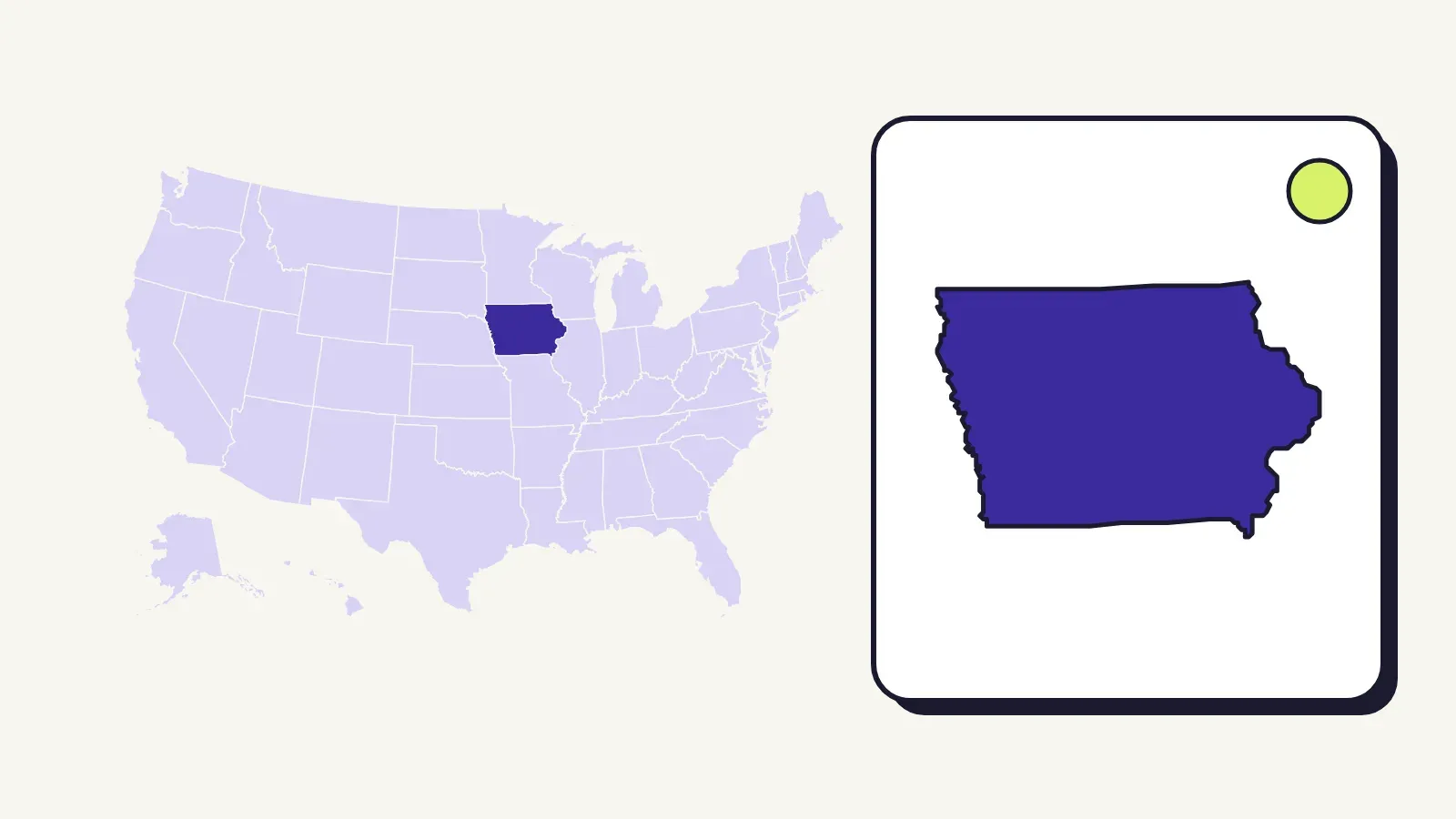
The short version
Iowa licenses payday lenders as delayed deposit services: a lender can hold no more than $500 in checks from you, for no longer than 31 days, and the fee is capped at $15 on the first $100 and $10 on each additional $100. Car title loans are limited to 21% a year unless a licensed lender's own rules allow more, and since July 1, 2026, regulated lenders may charge up to 3% a month (36% a year). Creditors have 10 years to sue on a written contract and five on an unwritten one.
Iowa lending rules at a glance
Payday loans are legal, within tight dollar limits
In Iowa a payday loan is called a delayed deposit service. You write a check (or authorize a debit), the business gives you cash, and it agrees to wait before depositing the check. The businesses are licensed by the Iowa Division of Banking under Iowa Code chapter 533D, which sets these limits:
- A lender may hold no more than two checks from you at one time.
- Those checks may total no more than $500 in face value.
- A check can be held for no more than 31 days.
- The fee is capped at $15 on the first $100 of the check and $10 on each additional $100.
- The lender may not pay off one payday loan with the proceeds of another from the same lender.
- A late penalty of up to $15 may be charged only once per check.
Those caps still add up. A $500 check can carry $55 in fees, so you'd walk out with $445. If the check is held for two weeks, that's an APR of roughly 320%. The lender must show you the fee and the APR before you sign.
Car title loans are held to 21%
Iowa Code section 537.2403 limits a consumer loan secured by your car's title to a finance charge of 21% a year, unless the lender is licensed under a law that authorizes a different rate. The same section bans dressing a title loan up as a sale, lease, pawn or rent-to-own deal to get around the cap. The triple-digit title loans sold in some states aren't legal here.
If a lender offers you cash for your title at a fee that looks like 25% a month, walk away and report it to the Division of Banking.
A 36% ceiling for licensed lenders since July 2026
Most consumer finance companies that make personal installment loans in Iowa hold a regulated loan license under Iowa Code chapter 536. House File 2329, signed on May 2, 2026, replaced the tiered rates the superintendent of banking used to set with a single ceiling of 3% a month, or 36% a year, for all regulated loans. It took effect July 1, 2026.
Before the change, the rates were tiered by balance. Under the rule the superintendent adopted in 2020, the limit was 36% a year on the first $3,000, 24% on the part from $3,000 to $8,400 and 18% on the part from $8,400 to $30,000. The new law drops the tiers, so the whole balance can now be charged up to 36%.
In practice, a larger loan from a licensed finance company can now cost more than it could before. The 36% figure is a ceiling, not the going rate: a borrower with good credit should see offers well below it. Compare at least three, and read how to compare loan offers before you choose.
How long a creditor can sue, and what it can take
Under Iowa Code section 614.1, a creditor has 10 years to sue on a written contract and five years on an unwritten one. Credit card debt is less clear. Iowa's statute doesn't name it, and many card accounts are opened without a signed agreement, so collectors often face the five-year limit. A creditor holding a signed contract may argue for 10. Read how the time limit works before you pay on an old debt or admit you owe it.
Iowa adds a yearly cap on top of the federal wage garnishment limit. Each judgment creditor can take only a set amount from your wages per calendar year, based on what you're expected to earn:
| Expected yearly earnings | Yearly limit per creditor |
|---|---|
| Under $12,000 | $250 |
| $12,000 to under $16,000 | $400 |
| $16,000 to under $24,000 | $800 |
| $24,000 to under $35,000 | $1,500 |
| $35,000 to under $50,000 | $2,000 |
| $50,000 or more | 10% of expected earnings |
The federal limit still applies on every paycheck: no more than 25% of disposable earnings, or the amount above 30 times the federal minimum wage, whichever is less. Child support and some other orders follow different rules.
Checking a lender and filing a complaint
- Check the license on NMLS Consumer Access or the Division of Banking's license verification page. A payday lender needs a delayed deposit license; an installment lender needs a regulated loan license.
- Get the numbers in writing: the amount you'll receive, every fee in dollars, the APR and the due date.
- Try the business first if something goes wrong, then file with the Division of Banking online. It usually gives the company 10 to 20 business days to respond.
- Report scams to the Iowa Attorney General's Consumer Protection Division and see how to spot loan scams.
Common questions
Are payday loans legal in Iowa?
Yes. Licensed delayed deposit services can hold up to $500 in checks from you for up to 31 days. Fees are capped at $15 on the first $100 and $10 on each additional $100.
Are title loans legal in Iowa?
A loan secured by your car title is limited to 21% a year unless the lender holds a license that allows a different rate, and it can't be disguised as a sale or lease. High-cost title loans like those in some other states aren't permitted.
What is the maximum interest rate on a personal loan in Iowa?
For lenders licensed under the Iowa Regulated Loan Act, the limit is 3% a month, or 36% a year, for loans made since July 1, 2026. Banks and credit unions follow their own rules, and federal credit unions are generally capped at 18%.
How long can a debt collector sue me in Iowa?
Ten years on a written contract and five years on an unwritten one. Credit card debt usually falls under the five-year rule, but a collector with a signed agreement may argue for 10.
Sources
- Iowa Code chapter 533D — Delayed Deposit Services
- Iowa Code section 537.2403 — Motor vehicle title loans
- House File 2329 (2026), enrolled — regulated loan rates (Iowa Legislature)
- Iowa Administrative Bulletin ARC 5090C — 2020 regulated loan rate rule
- Iowa Code section 614.1 — Limitations of actions
- Iowa Code section 642.21 — Wage garnishment limits
- Iowa Division of Banking — How to file a complaint
Facts on this page were checked against these sources on October 13, 2026. The 36% regulated loan ceiling applies to loans made on or after July 1, 2026; earlier loans keep the rates in their contracts.
Keep reading
-
Loan type
Payday loan alternatives
Credit union PALs up to $2,000 at 28% APR or less, paycheck advances, payment plans and local help.
-

Debt help
Old debt and time limits
Most states give collectors 3–6 years to sue. What can restart the clock, and why it's not the 7-year credit rule.
-
State law
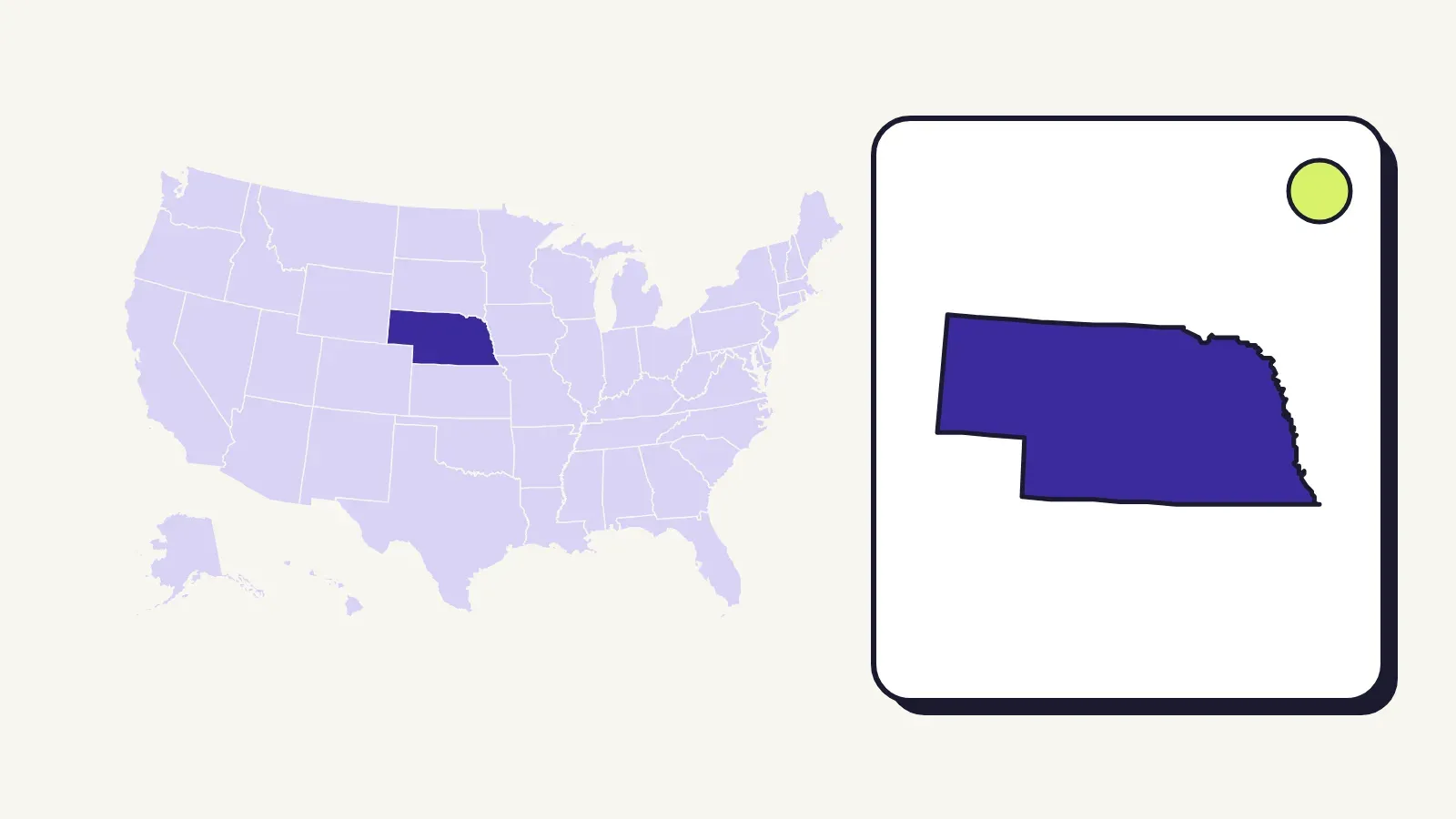
Nebraska
Payday loans capped at 36% APR since 2020; installment loans 24%/21%; 5-year limit on written contracts.