Payday banned
Borrowing in Arkansas: What State Law Allows
Arkansas has one of the strictest interest caps in the country, written into its constitution. Here is what that means for payday, title and installment loans, and how state law treats debts that go unpaid.
By Lendmira Editorial Team Updated 6 min read
- Payday loans
- Not allowed
- Rate cap, non-bank loans
- 17% a year
- Time limit to sue, written
- 5 years
- Weekly pay always exempt
- First $25 net
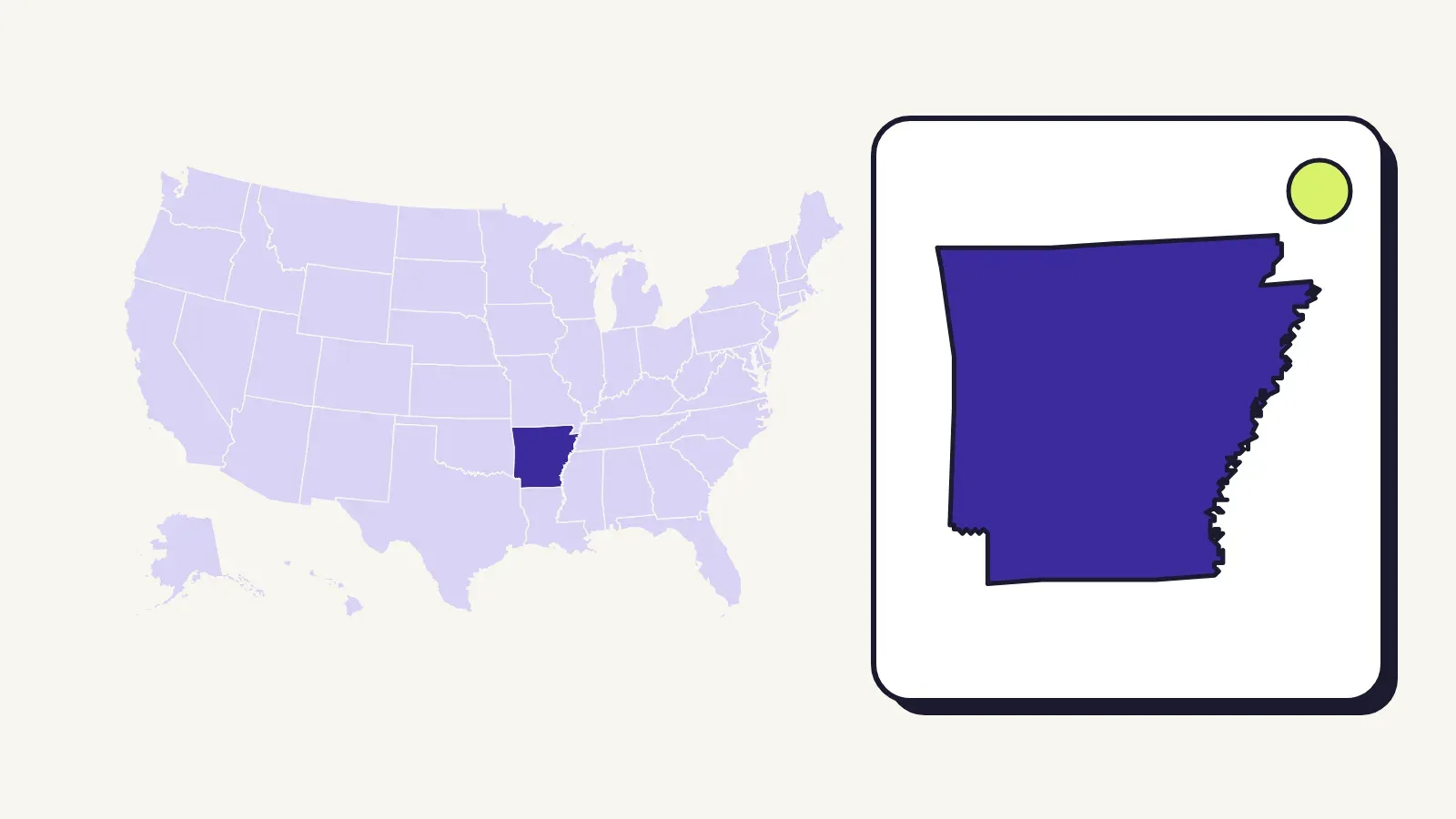
The short version
The Arkansas Constitution caps interest at 17% a year on loans that don't come from banks or government, so storefront payday and car title lenders can't operate. Online payday offers still reach Arkansans, and the Attorney General can ask lenders to cancel illegal loans. Creditors have five years to sue on a written contract, and the first $25 a week of your net wages can't be garnished.
Arkansas lending rules at a glance
A 17% cap written into the constitution
Amendment 89 to the Arkansas Constitution sets the maximum interest rate on loans and contracts that are not made by government or federally insured banks at 17% a year. Because it's in the constitution, the legislature can't raise it with an ordinary law.
Banks are treated differently. A federally insured bank with its main office in Arkansas may charge the rate federal law allowed such banks on March 1, 2009, which can be well above 17%. So a credit card or an online loan from a bank can carry a higher rate. The cap mostly limits finance companies and other non-bank lenders.
Payday and title loans: shut out, but still online
A two-week payday loan or a car title loan can't be priced at 17% a year and still make money, so these lenders have left the state. The Attorney General's office says it has worked to eliminate payday lending since 2008 and that storefront payday lenders have been shut down.
Online lenders are another matter. The Attorney General warns that online payday loans often roll over automatically so most of your payments go to fees, and that repaying a $300 payday loan typically costs more than $800.
Where to borrow small amounts instead
- Credit unions. Federal credit unions can charge no more than 18% APR on most loans, a ceiling extended through September 10, 2027.
- Your bank. Many banks offer small-dollar loans or overdraft lines to existing customers. Compare the APR and every fee.
- Payment plans. Utilities, hospitals and landlords often agree to spread a bill out if you ask before it's late.
Our guide to payday loan alternatives walks through each option. If your credit keeps you out of mainstream loans, see what lenders typically charge on the bad credit loans page.
Five years to sue on a written contract
A creditor has five years to sue on a written obligation and three years on a contract that is not in writing. A partial payment or a written acknowledgment of the debt extends the five-year period, so be careful what you pay or sign on an old account.
Credit card debt usually rests on a written cardholder agreement, which points to five years. If a collector can't produce the agreement, you may be able to argue the three-year period applies. Read how statutes of limitations work before you respond to a lawsuit on an old card.
Garnishment and the wages you keep
Federal law already limits garnishment to 25% of disposable earnings, or the amount above 30 times the federal minimum wage, whichever is less. Arkansas adds two protections:
- The first $25 a week of your net wages is absolutely exempt. You don't need to file anything to keep it.
- Up to 60 days' wages can be exempt if you file a sworn schedule showing the claim is less than your constitutional exemption and you don't have enough other personal property.
Exemptions often have to be claimed quickly once you're served, so read the papers the day they arrive. For your rights with collectors, see debt collectors and your rights.
Where to complain
- Save everything: the loan agreement, emails, texts and records of every withdrawal from your account.
- File with the Attorney General online through the Consumer Protection Division.
- Tell your bank in writing if you want to stop an online lender's automatic withdrawals, and file with the CFPB as well.
Common questions
Are payday loans legal in Arkansas?
No. The constitution caps non-bank loans at 17% a year, and the Attorney General says storefront payday lenders have been shut down. Online lenders still make offers that may be illegal under Arkansas law.
Are title loans legal in Arkansas?
No. The same 17% cap applies to non-bank lenders, which rules out the high-rate title loans sold in other states.
What is the statute of limitations on debt in Arkansas?
Five years for written contracts and three years for contracts not in writing. A partial payment or written acknowledgment can extend the five-year period.
How much of my wages can be garnished in Arkansas?
No more than the federal limit of 25% of disposable earnings, and the first $25 a week of your net pay is always exempt. You may be able to protect more by filing a sworn exemption claim.
Sources
- Arkansas Attorney General — Payday lending and check cashing
- Arkansas Constitution, Amendment 89 — Interest rates (Justia)
- Ark. Code § 16-56-111 — Written obligations, five years (Justia)
- Ark. Code § 16-56-105 — Three-year actions (Justia)
- Ark. Code § 16-66-208 — Wage exemptions (Justia)
- NCUA — Board extends federal credit union loan interest rate ceiling
Facts on this page were checked against these sources on October 13, 2026. The Attorney General's Consumer Protection Division handles complaints about illegal payday and online loans in Arkansas.
Keep reading
-

Loan type
Payday loan alternatives
Credit union PALs up to $2,000 at 28% APR or less, paycheck advances, payment plans and local help.
-

Debt help
Old debt and time limits
Most states give collectors 3–6 years to sue. What can restart the clock, and why it's not the 7-year credit rule.
-
State law
Missouri
Payday loans up to $500 with total costs capped at 75%; title loans up to $5,000 with no rate cap.